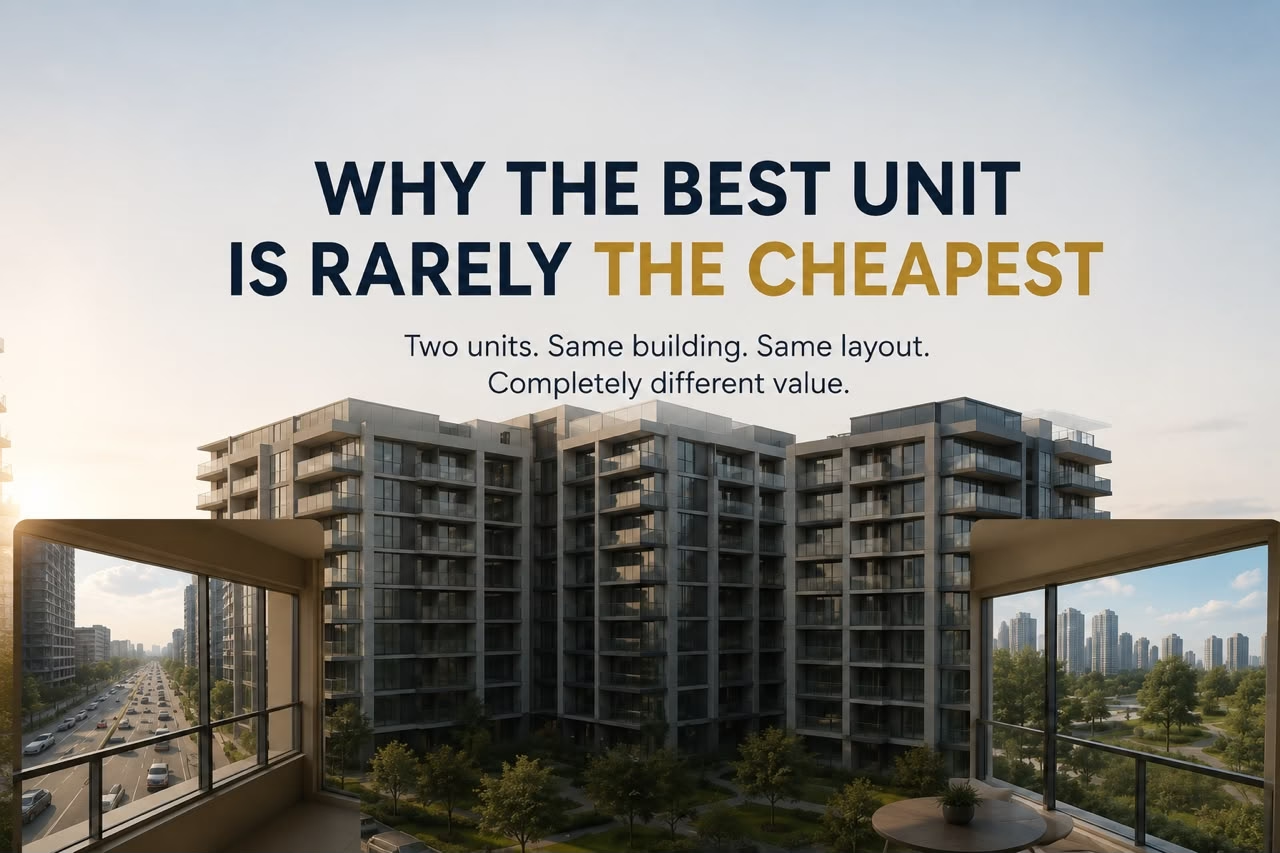
The Illusion of “Cheap” Real Estate: Why the Best Unit is Rarely the Lowest-Priced
The rookie mistake that costs property investors hundreds of thousands in resale value—and how to spot the true “trophy assets” inside any building.
Dear Real Estate Investors & Property Buyers,
When buying property, most people make a critical mistake:
They fall in love with the project, but they ignore the unit.
There is a common misconception in global property investment: If two apartments share the same square footage, the same layout, and are located in the same building, they must hold the same value.
This is a costly illusion.
In reality, they are two entirely different financial assets.
While the purchase price difference at launch might seem negligible, the long-term gap in capital appreciation, rental yield, and liquiditycan be astronomical.
Here is why experienced wealth managers never buy the cheapest unit in a building—and why you shouldn’t either.
The Concept of “Micro-Location”: Every Building is a City of Assets
A residential tower or master-planned community is not a single asset. It is a collection of hundreds of individual assets, each performing differently under market conditions.
Two apartments can feature the exact same floor plan, yet offer completely different ownership and financial profiles:
- Unit A: Sits adjacent to the elevator bank, faces a noisy main road, and overlooks the building’s service deck.
- Unit B: Sits at the end of a quiet corridor, boasts an unobstructed skyline view, and is oriented to receive optimal natural light.
On paper, they are identical. On the secondary market, Unit B is a premium asset, while Unit A suffers from a permanent liquidity discount.
The “Cheap Unit” Tax: Why Low Prices are Often Warnings
Developers do not price units randomly. They use sophisticated algorithmic pricing models to discount units with inherent, unchangeable flaws.
When a buyer chooses the cheapest unit simply because of the price tag, they are often unknowingly purchasing long-term compromises:
- Elevated Noise Pollution: Proximity to HVAC chillers, garbage chutes, elevators, or street traffic.
- Reduced Natural Light: Units blocked by neighboring towers or positioned in deep structural recesses.
- Zero Privacy: Windows facing directly into neighboring apartments or public pool areas.
- High Tenant Turnover: Inferior units experience higher vacancy rates because tenants quickly move out when better options open up in the same building.
The Golden Rule of Real Estate: You can renovate a kitchen, but you can never renovate a bad view, poor exposure, or a noisy location.
The Investor’s Pivot: Look Beyond the Marketing Brochure
Too many buyers spend weeks researching the developer, the payment plan, and the neighborhood—only to select their specific unit in a five-minute rush.
This is backwards.
Once you have identified a high-growth community and a reputable developer, your most critical decision begins: Which exact coordinate within that project will you own?
To secure maximum Return on Investment (ROI), you must prioritize features that cannot be replicated. In real estate, we call this scarcity value.
The Anatomy of a High-Value Unit:
- Superior Orientation: East or South-facing units (depending on the hemisphere) that maximize natural daylight.
- The View Premium: Open skylines, parks, water bodies, or landscaped gardens that can never be blocked by future construction.
- Optimal Layout Efficiency: Minimal corridor waste, corner placements with dual-aspect views, and distance from service areas.
- The Exclusivity Factor: Low-density floors or units with fewer shared walls.
Think Like an Asset Manager: Your 4-Step Checklist
Before you sign a booking form, run your selection through this professional investment framework:
- Analyze the Discount: Why is this unit priced lower than the others? Is the saving worth the permanent compromise?
- The “Equal Price” Test: If every unit in this building cost the exact same price, would I still choose this specific unit?
- Future Buyer Desirability: When the market is saturated with listings in 5 to 10 years, what makes my unit stand out from the competition?
- The Tenant Retention Factor: Will this unit attract high-caliber, long-term tenants who are willing to pay a premium for lifestyle comfort?
The smartest real estate investors do not just buy into a project; they surgically extract the strongest asset from within that project.
In the long run, your property’s performance won’t just be determined by the zip code or the community you choose. It will be determined by the exact view outside your window, the light in your living room, and the quietness of your bedroom.
Invest in position, not just price.